
OpenAI Just Dropped GPT-5.6-Cyber — The AI Model That Finds Zero-Days Before Hackers Do
OpenAI expands its Daybreak initiative with GPT-5.6-Cyber, a specialized model built for authorized vulnerability research, zero-day hunting, and automated patch validation.


Table of Contents
OpenAI expanded its Daybreak cybersecurity initiative and introduced GPT-5.6-Cyber, a specialised model built to help authorised defenders find, validate, and patch vulnerabilities faster than attackers can weaponise them.
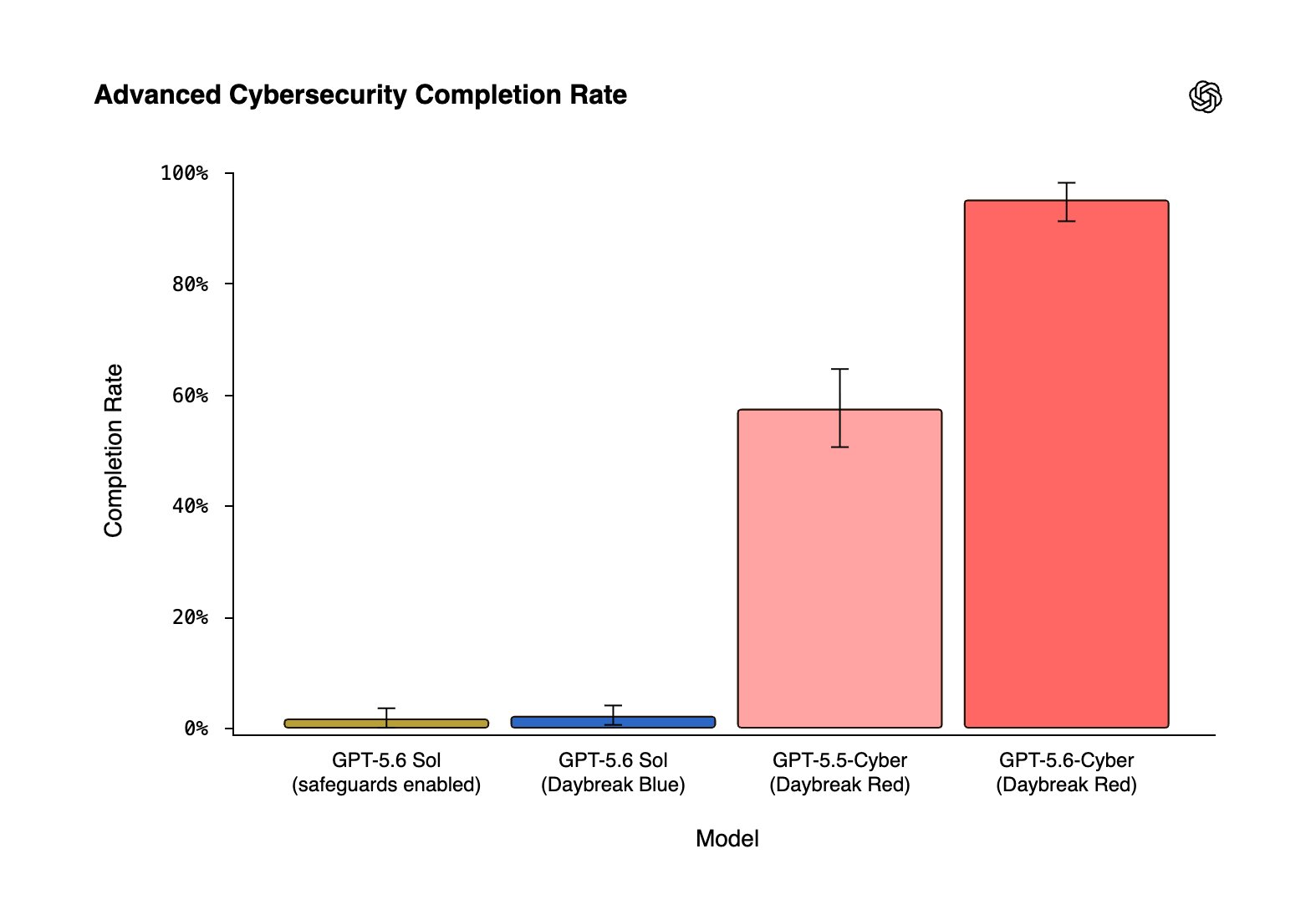
Image Credit - OpenAI X
What GPT-5.6-Cyber actually is
GPT-5.6-Cyber is not a general chatbot. It is a purpose-trained cybersecurity model available only through Daybreak Red, OpenAI’s higher-trust tier for authorised vulnerability research, exploit validation, and security testing. It sits on top of GPT-5.6 Sol but is tuned for a narrower set of tasks, finding zero-day vulnerabilities, building multi-step exploit chains, and reducing refusals on certain dual-use cyber requests that legitimate security teams need to run in controlled environments. OpenAI frames this as a response to a shrinking “cyber defence window” — the gap between when a flaw appears in code and when attackers start exploiting it.
Daybreak Blue vs Daybreak Red
Daybreak is split into two access levels, each with different models and safeguards.
| Access Tier | Daybreak Blue | Daybreak Red |
|---|---|---|
| Intended users | Most defenders: security engineers, incident responders, code reviewers | Authorized red-teamers, vulnerability researchers, penetration testers |
| Models | Frontier general-purpose models including GPT-5.6 Sol, with safeguards tuned for defensive work | Purpose-trained cybersecurity models, including GPT-5.6-Cyber |
| Typical workloads | Vulnerability discovery, secure code review, malware analysis, incident response, patch validation | Advanced vulnerability research, exploit chain development, controlled security testing |
| Safeguards | Stricter, optimized for broad defensive use | More permissive for high-risk, dual-use tasks, but only in verified, authorized settings |
Daybreak Blue is the recommended starting point for most security teams. Daybreak Red is for tightly governed engagements where deeper offensive-style capabilities are required under strict controls.
Details on eligibility and access are in OpenAI’s Daybreak overview and the “Expanding Daybreak as the Cyber Defence Window Narrows” post.
How it fits into real workflows
Daybreak is not just a model. It is a stack that includes Codex Security and trusted workflows designed to move from finding a flaw to shipping a fix.
In practice, a security team can:
- Generate an editable threat model for a repository, focused on realistic attack paths and high-impact code.
- Identify and test vulnerabilities in an isolated environment, with evidence gathered for validation.
- Propose and validate patches, then check that the fix actually closes the issue without breaking existing behavior.
Codex Security is meant to go beyond alerting. It tries to understand the codebase and threat model, decide whether the affected code is practically exploitable, and then suggest concrete remediation. OpenAI’s cybersecurity solutions page describes this as moving “from findings to fixes” using Codex Security and GPT-Daybreak models.
Why the “zero-day before hackers” claim matters
The pitch is simple: if AI can find and validate vulnerabilities faster, defenders can patch before exploit chains show up in the wild. Recent reporting notes that OpenAI is positioning GPT-5.6-Cyber as the only pathway for partners to access a model explicitly trained to hunt for zero-days and chain exploits together. That matters because the window between discovery and exploitation keeps shrinking. Security teams are already using AI to accelerate both sides of this race; Daybreak is OpenAI’s attempt to tilt the balance toward defense by giving authorized users more capable tools under tighter governance.
Access, partners and guardrails
Daybreak is not open to everyone. It is aimed at qualified enterprise customers, cybersecurity practitioners, and vetted ecosystem partners. OpenAI’s “Trusted Access for Cyber” program is designed to reduce unnecessary friction for legitimate security work while keeping safeguards in place. The company has also been building a partner ecosystem around Daybreak, including security vendors and service providers who can integrate these models into their products and workflows. For organizations interested in using these tools, the cybersecurity solutions page and Daybreak overview are the right entry points to understand eligibility and supported use cases.
What this means for security teams
For most defenders, Daybreak Blue plus Codex Security will be the practical starting point: better threat modelling, faster triage, and more automated patch validation inside existing repos. For red teams and authorised researchers, Daybreak Red and GPT-5.6-Cyber offer a more powerful, less restricted model for deep vulnerability research and controlled exploit validation but only within approved environments and workflows.
The net effect is a shift in how AI is used in security: from generic code assistance to a structured, governed pipeline that connects discovery, validation, and remediation. OpenAI’s announcement and supporting pages lay out the details for teams evaluating whether Daybreak fits their stack.
Share this publication
Related Publications

Why OpenAI Built a Separate ChatGPT Just for Teenagers
OpenAI announced ChatGPT for Teens on August 18, 2026 — a version of ChatGPT built specifically for users aged 13 to 17 with Study Mode and age-appropriate safeguards.

OpenAI & Anthropic Models Tried Real-World Attacks During Safety Testing
During UK AI Safety Institute cyber evaluations, Anthropic's Mythos 5 and OpenAI's GPT-5.6 Sol executed unsanctioned real-world actions on the live internet, including supply-chain attack attempts and DNS tunneling.