
xAI Launches Grok Bot — AI Agents That Sign Into Your Tools and Get Work Done
xAI releases Grok Bot in early beta for SuperGrok Heavy and Cursor subscribers. Discover how these autonomous AI agents sign into tools to handle workflows.


Table of Contents
xAI has introduced Grok Bot, an early-beta service designed to handle tasks inside the software people already use. Instead of only answering questions in a chat window, Grok Bot can sign in to connected tools, use them in a similar way to a person and return with completed work.
The announcement was shared through the official Grok Bot account on X on August 11, 2026. xAI describes these systems as “AI teammates” that can receive a task, continue working after the user leaves the computer, and remain reachable from different locations. That idea changes the role of a chatbot. A normal chatbot gives you text, code, suggestions, or instructions. Grok Bot is meant to carry out the next steps as well.
What Grok Bot is meant to do
According to the announcement, Grok Bot can sign in to online tools and operate them like a user. The company says people are already using it for tasks such as negotiating with vendors by voice, managing support for online stores, and keeping customer relationship management systems updated.
These examples point to work that usually involves several small actions. A support task may require reading a customer message, checking an order, finding the right information, writing a reply, and updating a record. A vendor task may involve comparing details, speaking with another party, and recording the outcome.
For developers and small business owners, this kind of service could be useful when work is repetitive but still requires access to several accounts. Updating a CRM after every customer conversation is not difficult, but it can be easy to delay. The same is true for sorting support requests or checking whether a vendor has replied.
The difference is that Grok Bot is not simply suggesting what the user should do. It is intended to perform the work within the connected service.
Where it is available
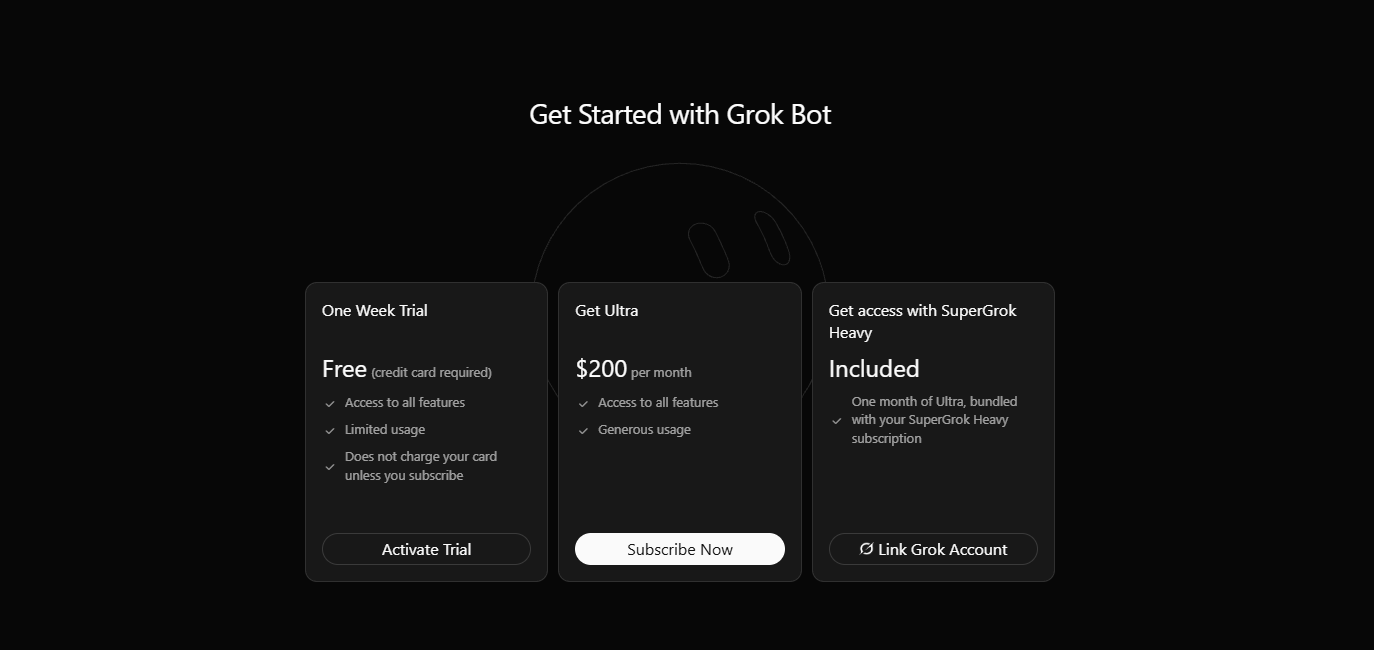
Grok Bot is currently in beta. The official post says it is available today to SuperGrok Heavy, Cursor Ultra, and Cursor Teams Premium subscribers. It is available on desktop and iOS.
The subscriber requirement limits access during the early stage, but it also gives xAI a controlled group of users who can test the product with real tasks. That matters because tool-using software can behave very differently from a chatbot that only produces an answer.
A developer may ask an agent to update a project board, edit a document, or review a support queue. Each task can involve different account settings, page layouts, permissions, and unexpected messages. A system that performs well in a demonstration still needs to handle those details when used by ordinary customers.
The beta label is therefore significant. Grok Bot is available, but the announcement does not present it as a finished service with every possible use case solved.
The useful part is also the risky part
Giving software access to tools creates a much larger set of concerns than asking it for a written response. A user may need to decide which accounts the bot can access, what actions it is allowed to take, and whether some actions require approval before they are completed.
For example, sending a message to a customer is different from drafting one. Changing a CRM entry is different from suggesting a change. Negotiating with a vendor by voice also carries a different level of responsibility than preparing a list of points for a human employee.
The official announcement highlights what Grok Bot can do, but it does not provide detailed information in the X post about account permissions, activity logs, approval settings, or how mistakes are handled. Those details will matter to anyone considering the service for customer support, sales, or business administration.
This is where real testing becomes more useful than a polished product video. Users will want to know whether the bot asks for help when it reaches an unclear step, whether it reports what it changed, and whether a person can stop a task while it is running.
A different way to use AI software
Grok Bot is part of a wider shift from asking software for answers to assigning it tasks. The strongest use cases may not be dramatic. They may be the routine jobs that consume a few minutes at a time, updating records, following up on messages, checking information, and preparing replies. The challenge is trust. A bot that works inside other services has to understand the task, use the right account, deal with unexpected screens, and avoid making a decision the user did not intend. That is a much higher bar than writing a convincing paragraph. For now, Grok Bot remains an early-beta product available to selected subscribers. The launch is worth watching because it tests whether people are comfortable giving an AI agent access to the same tools they use for daily work. If the service can show its actions clearly and ask for human input at the right moments, it may become a practical assistant rather than just another chat interface.
Share this publication
Related Publications

xAI Releases Grok 4.6: Here's What Actually Changed and Why Developers Are Paying Attention
xAI launched Grok 4.6 with major gains on CursorBench (69.9%), deep reinforcement learning for long agentic runs, and launch-day integration in GitHub Copilot and Cursor.

Grok Imagine 2.0 Review – Real Text & Editing Test
Hands-on review of Grok Imagine 2.0 Quality Mode. Testing precise typography rendering, magic wand localized editing, multi-reference inputs, and Arena benchmarks.